|
|
|
|
 |
 |
Home > Technology > Technical Information |
|
|
|
|
 |
Surge Protection and Grounding |
|
| 2. Earth |
|
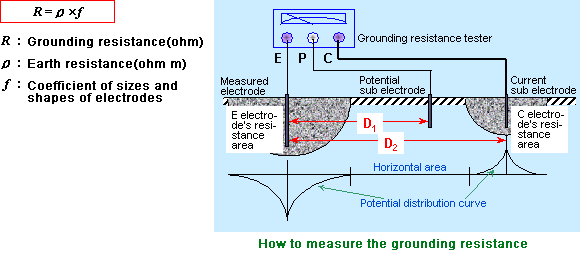
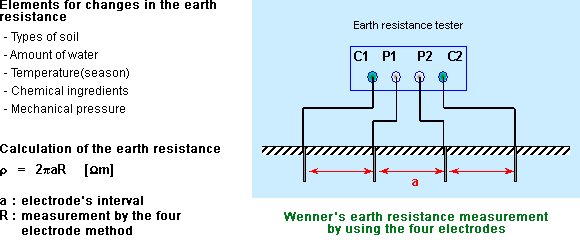
| 1) Overview of earth |
|
 |
|
 |
|
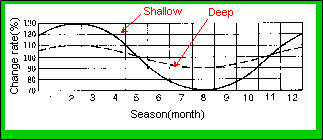
 Seasonal trend of the digital resistance Seasonal trend of the digital resistance |
|
 |
|
| Coefficient of seasonal changes of grounding resistance |
|
| Month |
2.3 |
1.4 |
5.12 |
6.11 |
7.10 |
8.9 |
| Changes |
1.0 |
0.9 |
0.8 |
0.7 |
0.6 |
0.5 |
|
| 2) Classification of Grounding |
|
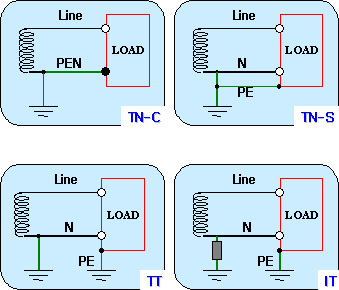
| Classification by system |
- TN system: The power supply and the load share the common ground. (TN-C,TN-S,TN-C,S)
- TT system: The power supply and the load have different grounds.
- IT system: The power supply not grounded or resistance load with a separated ground.
|
|
 |
|
| Classification by use |
- System grounding: transformer’s secondary side, neutral point grounding(class 2)
- Device grounding: metal box grounding(class 1,3), preventing electrical shocks
- lightning prevention grounding
* Power supply or communication path’s lightning surge grounding/processing ground line
* Building, lightning rod grounding(class1)
* Surge suppressor’s grounding
- Static electricity prevention grounding
- Grounding fault detection grounding
- Equi potential grounding: bonding for the grounding impedance
- Noise prevention grounding
* Static electricity prevention grounding
* EMI blocking grounding
- Functional grounding
* Communication grounding
* External box(shash) grounding
- Classification by methods
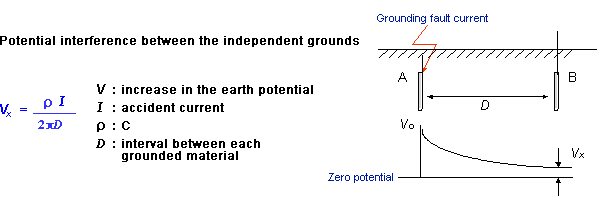
- Independent grounding
- Common grounding
|
|
 |
|
| Comparisons between a common ground and an independent ground |
|
| Classification |
Common |
Independent |
| Pros |
Prevents potential differences in each device caused by the lightning current. The lightning and fixed current grounded and discharged at the same time. |
If the lightning current damages the device, it can protect other systems. |
| Cons |
If the limit of the grounding system is exceeded, then all the connected systems can be damaged. |
It requires a sufficient interval between each system and perfect electrical insulation. |
| Operational characteristics |
One grounding system supports communication, security and lightning protection. |
After each grounding system is separated sufficiently, it is grounded individually. |
| Grounding design |
The grounding resistance should be set as low as possible in consideration of the equipment characteristics and the external environment. |
It requires perfect insulation separation between each system. Different type of installation for each system. |
| Selection criteria |
The object is to stabilize operation of the equipment by preventing different potentials of systems. |
Used when it is necessary to separate them. When it is very sensitive to noises and malfunctions are expected. |
| Countries |
USA, Europe |
Japan, Korea |
|
|
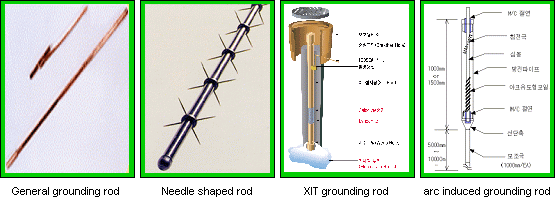
| 3) Types of Grounding Electrodes |
|
 |
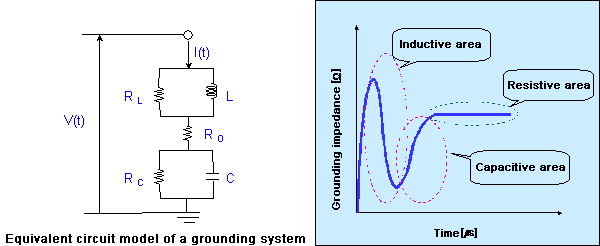
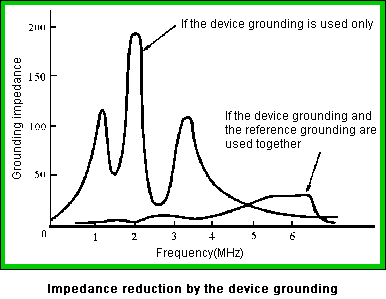
| 4) Grounding Impedance |
|
 |
|
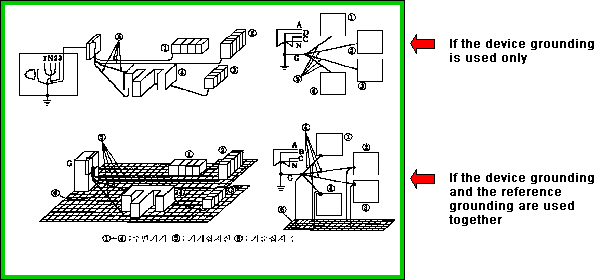
| Grounding impedance of the internal ground |
|
 |
|
 |
| 5) Equi Potential |
|
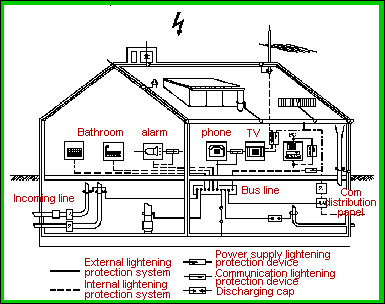
| Concept of a lightning protection system |
- External lightning
- Internal lightning
|
|
 |
|
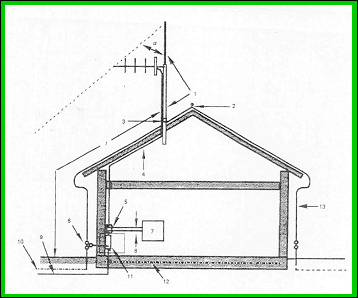
| Organization of an external lightning protection system |
- lightning receiver
- Conduction material
- Grounding system
|
|
 |
|
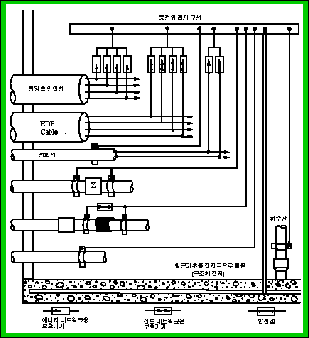
| Organization of an internal lightning protection system |
|
 |
|
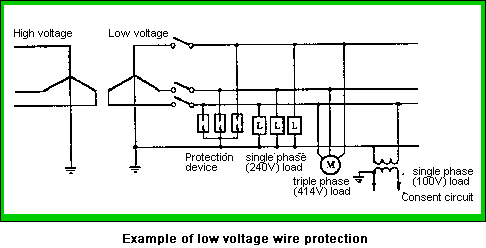
| Power facility protection design |
|
 |
|
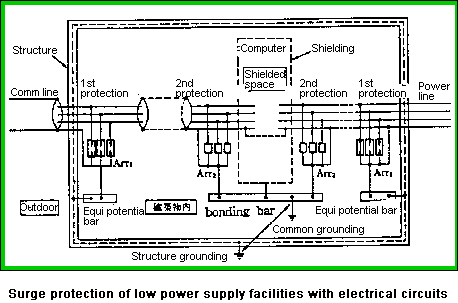
| Low power supply facility protection design |
|
 |
|
|
|
|
|
ADDRESS (Main office/factory)
Rm. 609 Suwon advanced venture valley, 958 Gosaek-dong Gwonseon-gu Gyeonggi-do
TEL. 82-31-8007-6150 FAX. 82-31-8007-6158 E-mail: prim0701@primesolution.co.kr
Copyrightⓒ 2003 by Prime solution co.,ltd. All Right Reserved.
|

 |
|
|